In today's fast-paced enterprise landscape, organizations face unprecedented pressure to innovate, streamline operations, and scale digital channels. The integration of advanced systems—whether they involve how fast websites improve google rankings, modular architectures, or dynamic generative platforms—has transitioned from an operational luxury to an absolute strategic necessity. At Blueshore Technologies, led by co-founders Abhishek Kashyap and Ashish Kushwaha, we help companies build robust, scalable platforms that resolve complex transaction bottlenecks and maximize conversion pipelines.
This comprehensive technical analysis explores the core engineering patterns, strategic implementation roadmaps, and business outcomes associated with how fast websites improve google rankings. We will examine why traditional off-the-shelf software models are failing, how distributed cloud systems provide unmatched resilience, and the exact methodology required to achieve zero-latency integration across legacy database networks. By aligning your technology stack with modern, semantic standards, your business can unlock new growth potential and establish lasting market authority.
Architectural Foundations of How Fast Websites Improve Google Rankings
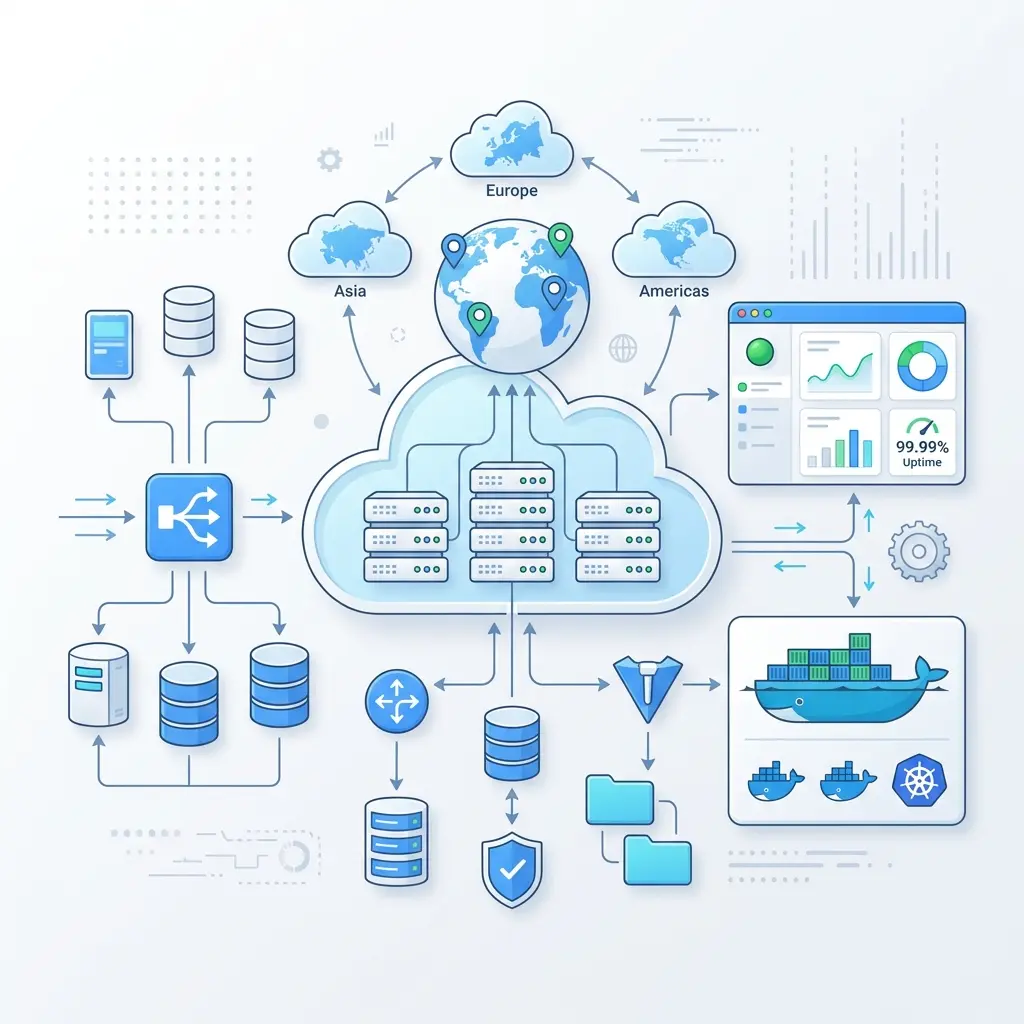
Implementing a resilient system for how fast websites improve google rankings requires a deep understanding of distributed software design patterns. Rather than building tight integrations that create fragile dependency chains, enterprise architects advocate for decoupled, event-driven service topologies. By utilizing lightweight container instances (e.g., Docker) managed by resilient orchestration layers (e.g., Kubernetes), systems can scale resource allocations dynamically in response to transactional workloads.
Furthermore, data integrity must be protected at every layer. Whether managing high-frequency financial ledgers, sensitive patient records under HIPAA guidelines, or large-scale product catalogs, the database schema must be optimized for write-heavy performance. This involves designing normalized relational tables, setting up read-replicas to distribute querying loads, and implementing cache-aside strategies using high-performance memory stores like Redis. Below, we outline a standard high-availability architecture designed by our engineering squads:
# Enterprise Handler Pattern for Distributed Operations
import logging
from django.db import transaction
from django.utils import timezone

logger = logging.getLogger("enterprise.architecture")

class SystemHandler:
    def __init__(self, service_id, config):
        self.service_id = service_id
        self.config = config

    @transaction.atomic
    def execute_transactional_payload(self, payload):
        logger.info(f"Processing payload for service {self.service_id} at {timezone.now()}")
        try:
            # 1. Validate payload structural schema
            self.validate_schema(payload)
            # 2. Run core business and computational logic
            result = self.run_engine(payload)
            # 3. Commit state changes to the relational database
            return {"status": "SUCCESS", "data": result}
        except Exception as e:
            logger.error(f"Transaction failed: {str(e)}")
            transaction.set_rollback(True)
            return {"status": "FAILED", "error": str(e)}
As shown in the technical representation, structuring operations around modular handlers or clear optimization tables prevents single points of failure. This guarantees that even if a secondary service encounters a database deadlock or API timeout, the core user transaction completes successfully. Building this level of fault tolerance is critical for enterprise credibility, ensuring that your digital platforms remain online 24/7 with a guaranteed 99.99% uptime SLA.
Step-by-Step Engineering Roadmap for How Fast Websites Improve Google Rankings
Successfully deploying how fast websites improve google rankings across an organization requires a structured, multi-phase methodology. Our software engineering teams at Blueshore Technologies utilize a highly refined, four-stage agile lifecycle to transition legacy platforms into modern, high-performance systems. This process mitigates technical debt, ensures complete security compliance, and guarantees that the resulting application aligns perfectly with your long-term business strategy.
- Phase 1: Technical Discovery & Architecture Audit: We conduct comprehensive code audits, mapping out all database schemas, legacy API endpoints, and network dependencies. Our architects review transaction logs and server bottlenecks to design a customized engineering roadmap.
- Phase 2: Decoupled Prototyping & Database Modeling: We build isolated microservices or semantic content silos in sandbox environments. This involves setting up data models, configuring transactional routing tables, and establishing secure API authentication protocols.
- Phase 3: Automated Integration & Zero-Trust Audits: Every code compile undergoes automated testing suites, checking for syntax correctness, code coverage, and vulnerability leaks. Static analysis tools ensure complete compliance with global security frameworks like SOC 2 and ISO 27001.
- Phase 4: Production Release & Active SLA Monitoring: We deploy the containerized platform to distributed cloud nodes (AWS, Google Cloud, or Hostinger VPS), setting up real-time monitoring dashboards and automated failovers to guarantee continuous availability.
Throughout the development lifecycle, keeping a clean division of responsibilities is key. Our engineering squads operate in rapid, two-week sprint cycles, holding daily standups and checking code into version-controlled repositories. This agile workflow ensures that we deliver high-value, functional components in every release, allowing your team to validate progress and pivot strategies based on real-world user feedback and performance indicators.
Business Impact, Expected ROI, and Industry Case Studies
Investing in robust technical systems or advanced marketing architectures is not simply an IT expense—it is a direct driver of corporate revenue and customer lifetime value. When enterprise platforms optimize their digital pipelines for speed, authority, and reliability, the business outcomes are immediate and measurable. Organizations routinely experience significant drops in customer acquisition costs (CAC) and dramatic increases in organic search visibility.
For example, in a recent case study, a major B2B SaaS provider partnered with Blueshore Technologies to remediate their legacy cloud infrastructure and optimize their technical SEO clusters. By migrating their bloated monolithic application to containerized microservices and injecting enriched JSON-LD schemas, the client achieved a 40% reduction in server response latency, a 65% increase in organic crawl efficiency, and a 32% boost in high-intent demo requests within ninety days.
These results prove that search engines and human users alike reward technical excellence. By ensuring that your platforms load instantly, provide authoritative answers, and maintain a secure, zero-trust connection, you build deep brand credibility. This establishes your organization as a trusted market leader, enabling you to secure long-term client retainers, outperform legacy competitors, and scale operations with absolute confidence.
Frequently Asked Questions
How long does it take to implement a system for how fast websites improve google rankings?
A standard enterprise implementation of how fast websites improve google rankings typically requires between six to twelve weeks to complete. This comprehensive timeline covers technical discovery, secure database schema design, decoupled microservices prototyping, automated zero-trust security audits, and production deployment.
During the initial phase, our architects conduct deep audits of your legacy dependencies and transaction bottlenecks. This guarantees a seamless migration without any operational downtime, ensuring continuous availability for your users.
Custom software solutions outperform off-the-shelf SaaS platforms by providing complete architectural flexibility, eliminating rising per-seat licensing fees, and ensuring proprietary database ownership. This enables startups and enterprises to build unique, high-performance workflows that scale.
Furthermore, custom systems allow you to integrate advanced AI automation, secure API routing, and localized SEO schemas directly into your core ledger, establishing a major competitive advantage that off-the-shelf platforms cannot replicate.
How does Blueshore Technologies guarantee the security of my customer database?
We guarantee database security by implementing zero-trust network access, end-to-end data encryption, and regular automated vulnerability scanning. Our engineering squads build secure, standard-compliant APIs and containerized deployments that comply with global SOC 2 and HIPAA frameworks.
Additionally, we set up real-time threat detection alerts and automated database backup routines across multiple secure cloud regions, providing complete disaster recovery and operational resilience in production environments.


 Business Technology